




What should the digital wallet platform be like in 2025? It should have a flexible, scalable, and compliant architecture. In our new blog article, we’ll talk about three key components of a successful mobile wallet — KYC, escrow, and API. They work as a single system, ensuring identity verification, secure retention of funds, and seamless integration with partner services.
Qulix uses AI to dynamically analyze KYC data, as well as applies smart contracts to automate Escrow and build an API architecture based on open standards. This allows us to quickly adapt to new requirements, protect user data, and scale the digital wallet platform without losing performance.

written by:
Anton Rykov
Product Manager
KYC Inside: How Qulix Is Building Trust from Scratch
In 2025, more than 70% of KYC processes will be automated using biometrics, digital identity, and data analytics. This will significantly reduce customer onboarding time and improve the accuracy of risk assessment. At the same time, global losses from financial crime are estimated at $2 trillion annually, making effective KYC/AML solutions critically important.
We want to make KYC a strategic advantage rather than just a mandatory component. That’s why we implement it taking into account technological capabilities, user expectations, and regulatory requirements. Let’s see how we integrate KYC into the architecture of our digital wallet:
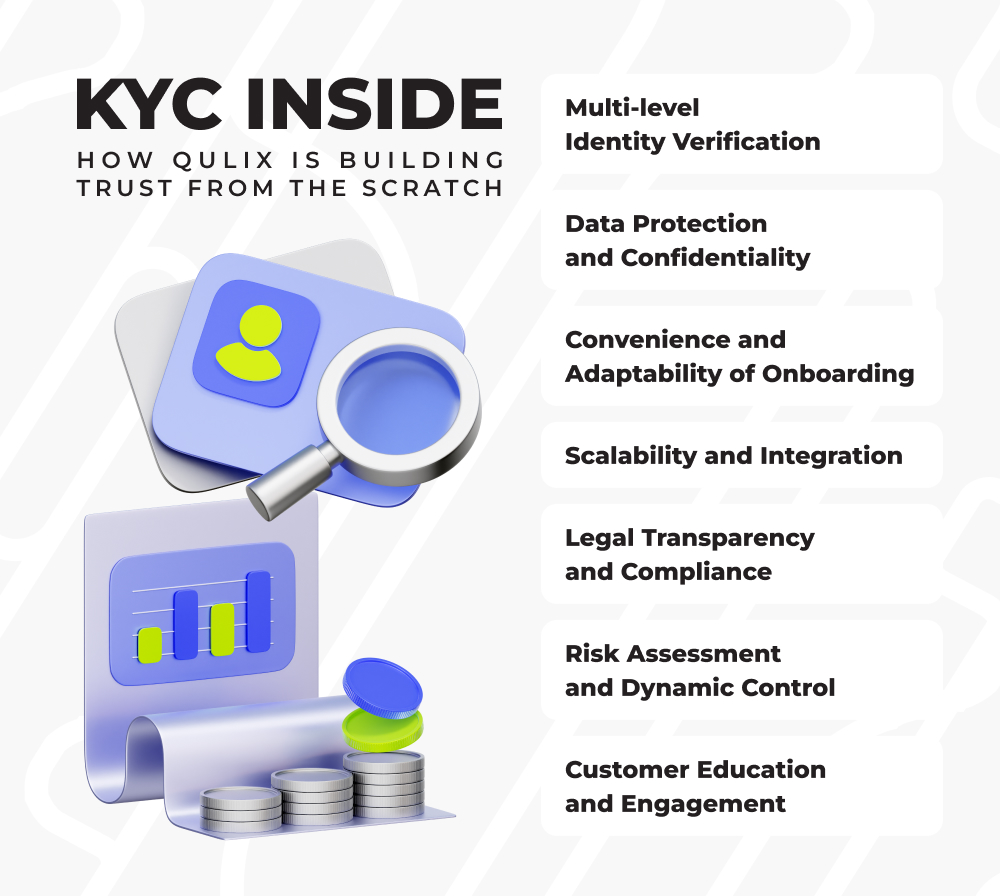
Multi-Level Identity Verification
We use hybrid methods that include documentary verification, biometric authentication, and digital ID cards. This allows us to verify users’ identities in real time, which significantly accelerates the registration process and reduces the number of refusals. Applying artificial intelligence algorithms helps Qulix reveal counterfeits and inconsistencies, as well as ensure high verification accuracy.
Data Protection and Confidentiality
We use end-to-end encryption and tokenization of personal information. Access to data is strictly regulated through a role-based model that excludes unauthorized access. We regularly conduct security audits and penetration tests to promptly eliminate vulnerabilities and prevent data leaks.
Convenience and Adaptability of Onboarding
We adapted the KYC interface for mobile devices taking into account up-to-date UX standards. The user signs in with the help of clear step-by-step navigation revealing no more than the essentials. This increases conversion and reduces the bounce rate. Our fintech apps support various languages and localization to attract more international customers.
Scalability and Integration
Our KYC modules are easily integrated via API with other solutions from AML engines to CRM systems. Automated procedures reduce the workload on teams and accelerate the processing of requests. We apply microservice architecture to ensure flexibility. This allows us to quickly implement updates and adjust to evolving standards.
Legal Transparency and Compliance
Qulix monitors regulatory changes, including FATF, GDPR, and FinCEN requirements, and automatically adapts internal policies. We keep all documents in a format ready for external audit. Consultations with legal experts and regulators are part of our working processes and help us mitigate the risks of violation of the law.
Risk Assessment and Dynamic Control
High-risk customers undergo enhanced due diligence, including additional identification steps. Our digital wallet platform continuously monitors transactions and behavior of users, allowing us to timely respond to suspicious activity. An automatic escalation mechanism informs the security service of possible violations.
Customer Education and Engagement
Qulix openly explains the goals and stages of our KYC process, providing users with an access to interactive tips and help information. The privacy policy is presented in a transparent form and is available through the wallet interface. Our support team promptly responds to user questions, reducing anxiety and increasing loyalty.
Escrow Engine: Keeping Your Transactions Safe and Sound
Escrow mechanisms are used in digital wallets to ensure the security of transactions between the parties. Specialists expect the automated escrow systems based on smart contracts and machine learning to gain popularity in 2025. They will minimize manual intervention and make transactions faster.
Besides, multi-asset escrow solutions are emerging, allowing cryptocurrencies, stablecoins, and NFTs to be held in a single transaction. This is especially relevant for high-value transactions and cross-border payments that require flexibility and transparency.
Our digital wallet implements the escrow mechanism as a key element of trust and security in transactions between users. How does it work? When two parties enter into a transaction (for example, a buyer and a seller), funds are temporarily locked in an escrow account within the platform. This means that the money does not go to the seller until the buyer confirms receipt of the goods or services in full compliance with the terms of the transaction.
The escrow function is integrated into the wallet architecture via smart contracts and APIs, which allows us to automate the process of holding and releasing funds. All actions are recorded in the transaction log, and users receive real-time notifications about each stage of the transaction. To increase transparency and protect the interests of both parties, we have implemented the following measures:
- Verification of transaction participants through KYC and biometrics;
- Dispute resolution mechanisms that allow you to invoke arbitral proceedings if required;
- Support for multi-currency transactions and conversion within a single platform; and
- Data encryption and two-factor authentication to protect your funds.
Escrow is especially useful in P2P transactions, freelance services, rent, sale of digital assets, and other scenarios where it’s important to eliminate the risk of fraud. Thanks to the escrow mechanism, users can safely interact with each other even if they have not previously met.
API-First Mentality: How Our Architecture Supports Flexibility
According to CoinLaw, 90% of financial institutions use APIs to improve customer experience. Moreover, the volume of API requests in the financial industry has exceeded 2 billion per day. This confirms that APIs are not just a technical interface, they are the foundation of digital transformation.
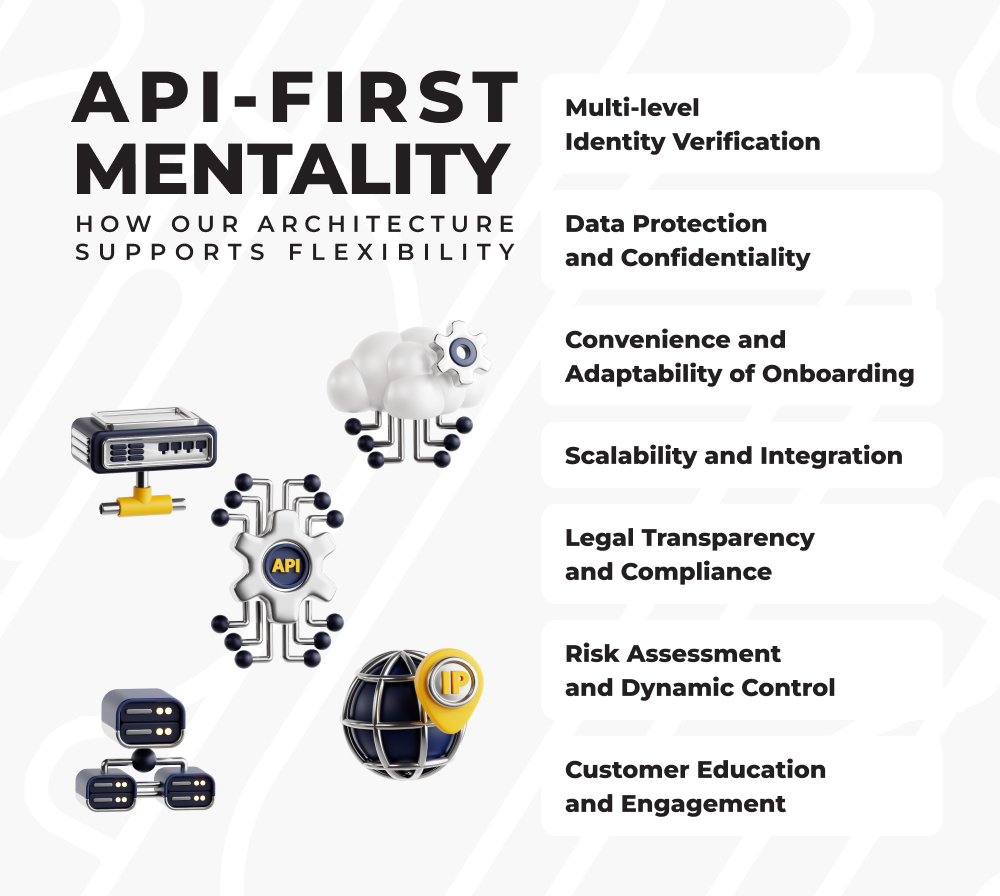
Our digital wallet platform is based on a well-thought-out API architecture that ensures reliable integration, high performance, and flexible scalability. APIs are not just an interface, they are a link between modules, external services, and user experience.
Integration with Payment Gateways
Our APIs allow you to connect various payment gateways, such as Stripe and PayPal, to local banking systems. You will be able to add various cards, make bank transfers, as well as use alternative payment methods. All transactions go through secure channels with encryption and tokenization.
Authentication and Security
To protect personal data, Qulix uses APIs that support multi-factor authentication, biometrics, and OAuth 2.0. Generation of access tokens and session control are implemented through internal and partner APIs, which eliminates unauthorized access and complies with PCI DSS and GDPR requirements.
Transaction Management
The API handles the full cycle of transaction processing, including initiation, confirmation, refunds, disputes, and so on. Customers receive real-time notifications, while administrators have access to analytics and transaction logs. This allows you to track activity and quickly respond to incidents.
Interoperability and Open Standards
We support Open Banking API and ISO 20022 standards, which allows our mobile wallets and fintech apps to interact with banking systems, other wallets, and financial platforms. This expands user capabilities and facilitates integration with external services.
Currency Conversion and Crypto Transactions
APIs for currency conversion provide up-to-date rates and instant settlements. For cryptocurrencies, specialized APIs are used that support the storage, exchange and sending of digital assets taking into account volatility and security.
Analytics and Reporting
Built-in APIs allow you to collect data on user behavior, transactions, and system performance. This helps you make informed decisions, optimize UX, and identify bottlenecks. Integration with analytics platforms (e.g. Google Analytics API) expands your monitoring capabilities.
Scalability and Customization
Our microservice architecture allows our APIs to easily scale and adapt to new features. You can easily add new modules, such as bonus programs or NFT wallets. This will allow you to quickly respond to market changes and user requests.
Compliance
APIs help you comply with regulatory requirements, from AML/KYC to local banking regulations. We integrate fintech solutions that provide automatic compliance checking, documentation, and preparation for audits.
Wrapping Up
In 2026, the number of digital wallet users will exceed 5.2 billion, which is more than 60% of the world's population. If you are planning to develop a mobile wallet, you already need to think about the architecture. It is a synthesis of regulatory rigor, technological flexibility, and transparency. Successful solutions combine KYC/AML, automated escrow, API integration, and real-time monitoring, creating platforms that can adapt to global challenges and ensure user trust.
Component
Benefits for the mobile wallet
Security and trust
Scalability and Compliance
KYC
- User identity verification
- Fraud prevention
- Simplify AML/CFT compliance
High protection against fraud and corruption
Ensures international compatibility with standards
Escrow
- Securing transactions until conditions are met
- Increased trust between parties
- Minimizing disputes
Trust in the platform by holding funds until confirmation
Limited scalability, requires fine-tuning of logic
API
- Integration with other services
- Mobility and flexibility
- Quick adaptation to new requirements
It does not provide protection on its own, but it enhances security when combined with other layers
The key to scalability and modularity of architecture
Looking for a secure, user-first digital wallet that meets every compliance benchmark? Contact us today and launch your next-gen wallet in record time.




Contacts
Feel free to get in touch with us! Use this contact form for an ASAP response.
Call us at +44 151 528 8015
E-mail us at request@qulix.com


Feel free to get in touch with us! Use this contact form for an ASAP response.
Call us at +44 151 528 8015
E-mail us at request@qulix.com


