“Copilot. Your everyday AI companion”. Whenever you open Microsoft’s AI Copilot, you expect to interact with a reliable and innovative assistant. But Microsoft isn’t the only player in the game. GitHub Copilot and JetBrains Copilot are also making strides, constantly learning from endless data to grow equally indispensable.
What is Copilot AI, and are all its forms equally good for optimizing daily business tasks? Which is better — an off-the-shelf solution or a custom-built copilot geared to your needs? In this blog post, we'll explore the ins and outs of these smart machines, compare the different options, and help you decide which one is best for you.
What Is an AI Copilot: The Definition
An AI copilot is an intelligent chat interface designed to skyrocket user productivity. Based on artificial intelligence (AI) models, it excels in searching for information and generating and processing texts almost without human intervention.
But copilot capabilities extend beyond text generation. It can analyze complex datasets, automate day-to-day operations, and create visual content based on simple descriptions. For developers, copilots can write and debug code in popular languages like Java, JavaScript, C#, C, and Python.
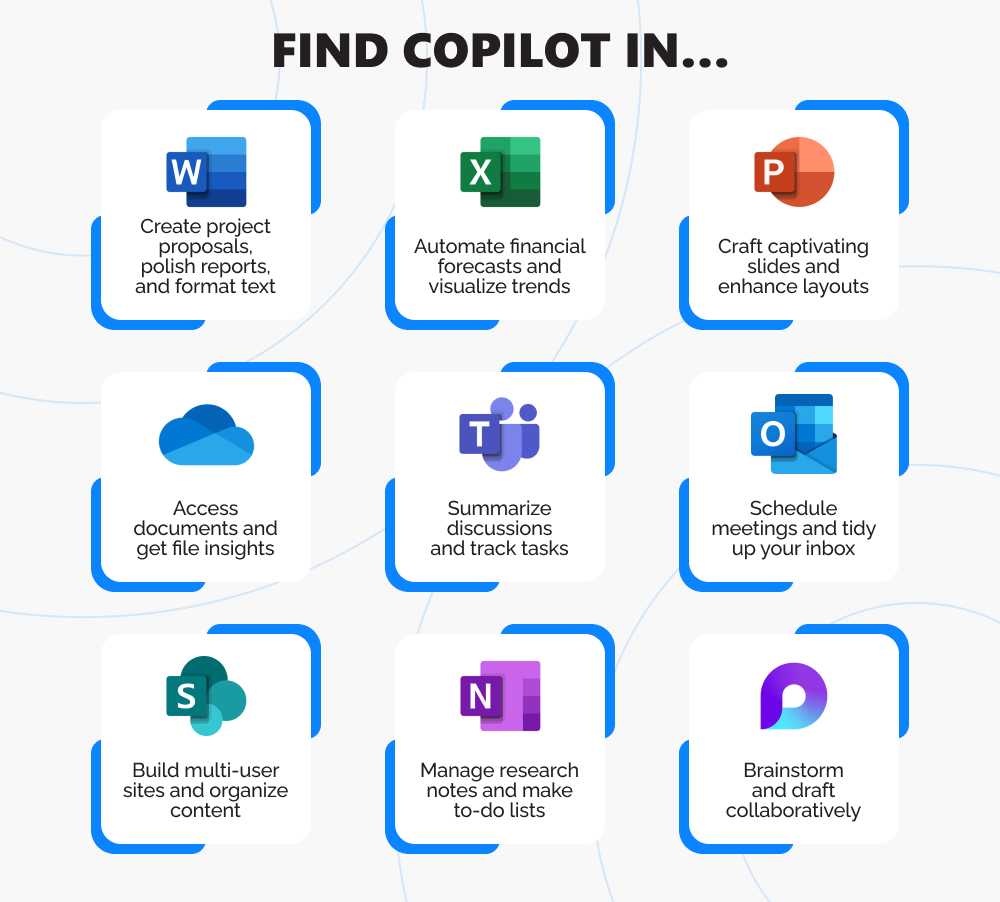
What Tech Underpins an AI Copilot
AI copilots rely on large language models (LLMs) such as GPT (Generative Pre-trained Transformer), along with natural language processing (NLP) and machine learning technologies. These allow the machine to read and create human-like text, generate images, and perform creative tasks like writing jokes.
One of the most renowned copilots in the tech world is Microsoft Copilot. What’s at its core?
Its large language AI model is trained on public data and hosted on the Microsoft Cloud via Azure OpenAI services. You can browse your chats, documents, and files securely through Microsoft Graph. It guarantees your information remains private and is not used to train AI.
The great news is that Microsoft offers a powerful tool for building your own unique AI copilot — Azure AI Studio. While Microsoft Azure has long provided many services for developing AI solutions, developers used to juggle several tools and web portals within a single project. The introduction of Azure AI Studio has solved this problem. How does it accomplish this?
The service integrates the capabilities of Azure Machine Learning, the Azure OpenAI service, and other Azure AI tools. It has equipped IT teams with a centralized workspace where developers can collaborate with data scientists and other professionals to create custom AI solutions.
How AI Copilots Work
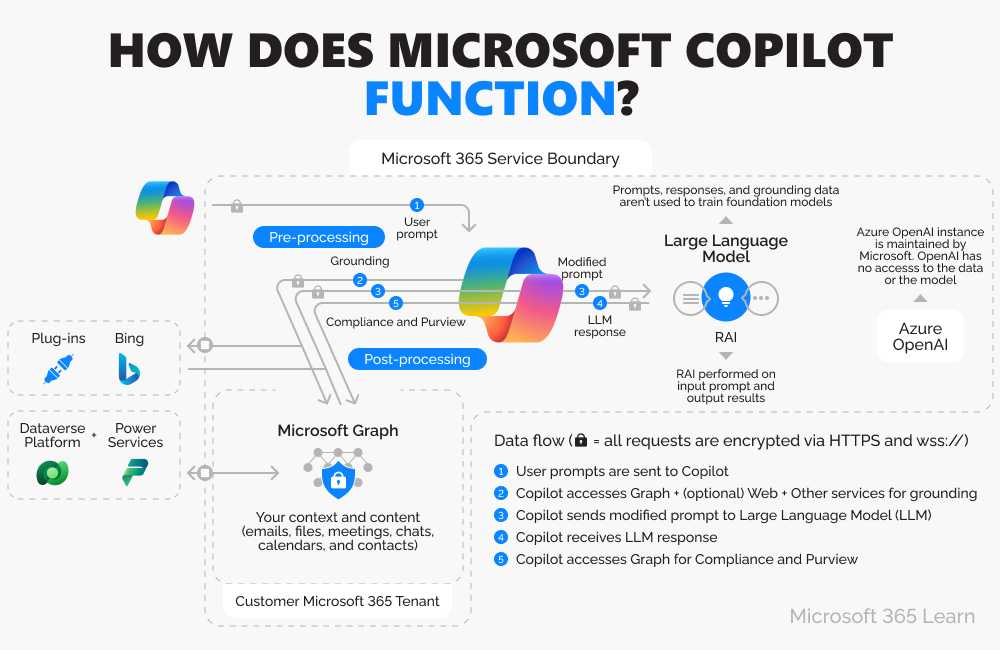
A copilot analyzes user input, context, and requests to provide relevant recommendations or perform tasks. Sometimes it can even predict your actions and offer solutions ahead of time.
Here's a diagram of the entire process of how your prompt turns into an AI response, using Microsoft's Copilot as an example:
What copilots can't do? As Mark Thompson, Microsoft 365 Training Specialist, puts it:
“Copilot can only suggest content and create a draft for you to work on. You’ve still got to do your work, you’ve still got to bring the humanity to it — your knowledge, your judgement, and empathy, and all that other stuff.”
Major Perks of AI Copilots
Whether it's a prebuilt copilot or a custom one, both aim to make the lives of their users easier. These AI assistants bring a bunch of benefits to the table, although not without their drawbacks. Let’s explore them.
Perk #1: Engagement and Creativity
In a 2023 Microsoft survey, 77% of Copilot users claimed they wouldn’t give it up. Why?
AI copilots are a great source of original ideas and diverse perspectives. When you brainstorm for a marketing campaign, they can generate captivating concepts and taglines that your team may not have even considered. This approach can yield more dynamic content that will hook your audience.
Con: Clutter
AI helpers generate a treasure trove of ideas and content. However, this wealth can lead to information overload, making it tough to sift through. If not addressed promptly, this hampers productivity and focus.
Perk #2: Work-Related Productivity
Statista’s research shows Microsoft’s Copilot users complete tasks more than 70% faster than the baseline. This jump in productivity comes from the machine’s automated suggestions. They reduce the time and cognitive effort it takes to sort out complex problems.
Con: Reduced Human Interaction
As virtual assistants automate more tasks, team members get fewer opportunities to interact. This can undermine team spirit and cohesion. Solution? Strive for a balance between automation and collaboration to preserve a vibrant and creativity-filled work environment.
Perk #3: Informed Decision-Making Processes
You can access copilots when you're uncertain about a decision. For example, AI systems can analyze current market conditions and key player performance to provide a well-rounded view of profitable business investments.
Con: Over-Reliance on AI
There’s a risk of becoming overly dependent on generative AI, potentially neglecting human intuition and critical thinking. What is the right approach then? Use AI chatbots as a resource that inspires, rather than substitutes, humans.
Perk #4: Personalized Assistance
Copilots learn from your preferences with every simple prompt. They can adjust suggestions and actions individually, whether recommending business papers or finding apps to manage resources more effectively. Double productivity, again.
Con: Privacy Concerns
Personalization means sharing personal data. This can raise privacy issues if not treated with due diligence. Strong data protection and transparency about information usage are key to user trust.
Perk #5: Continuous Learning and Improvement
Copilot AI helps you make smarter decisions and get a daily dose of inspiration. What does it charge you for this? Data. The machine constantly learns from user interactions as it seeks answers to their queries.
Con: Data Dependency
Information brings not only knowledge but also dependency. AI-powered systems lean heavily on data, so inaccuracies or biases may affect output quality. To mitigate this risk, regularly review and update data sources.
Ready-Made vs. Custom AI Copilot
While the pros and cons of custom and off-the-shelf AI copilots are similar, some aspects set them apart. We’ve prepared a table outlining these differences.
Who Will Win with Custom AI Copilots?
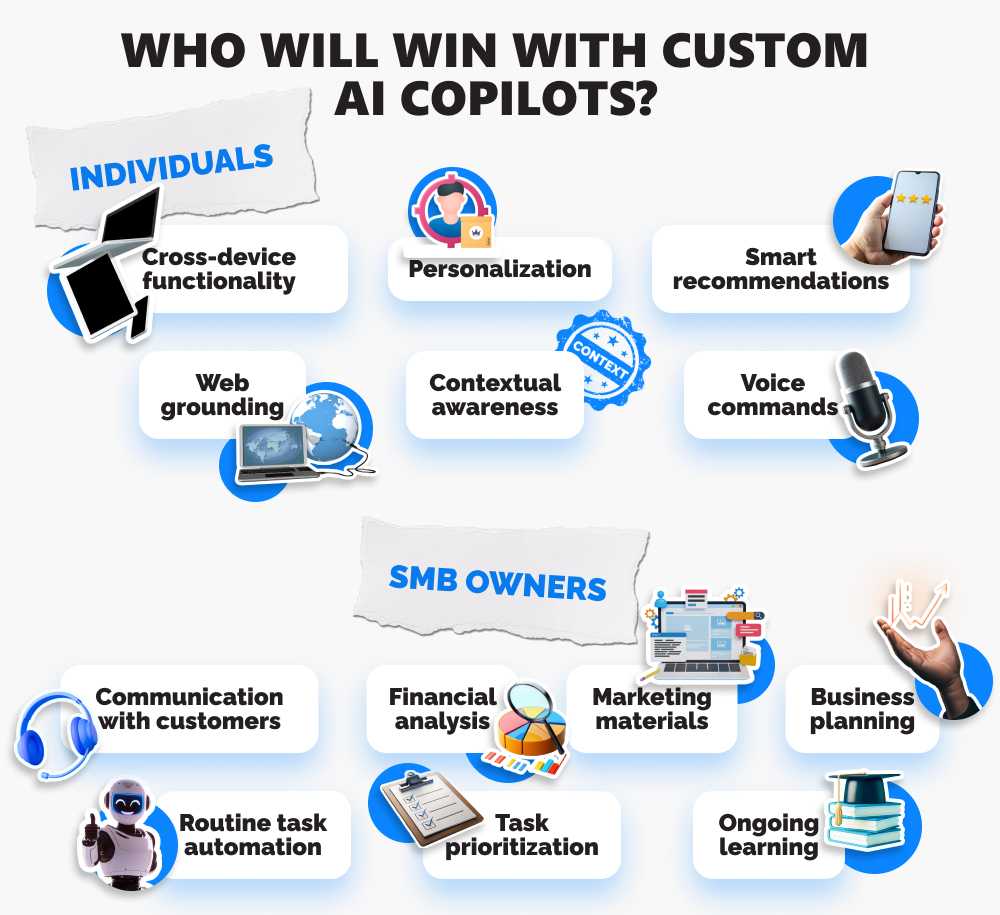
Still think an off-the-shelf AI solution is the best option? Think again. Custom AI Copilots, especially those built on Azure, offer the flexibility to address specific roles and tasks without being generic. Here’s how different users can benefit from their bespoke powers:
Individuals
If you’re a solopreneur, freelancer, or just striving to maximize your digital tools, a custom-built copilot can become your main man.
Small Business Owners
What are the job duties of a typical SMB owner? Juggling dozens of responsibilities, from customer communication to financial analysis. Copilots understand the pains of today's entrepreneurs and can ease them. Rather than getting buried in routine tasks, they allow you to focus on the essentials: your strategy for success.
Corporate Teams
For larger organizations, custom-built copilots offer high productivity and collaboration.
Software Developers
Recent statistics on GitHub Copilot reveal that developers using AI Copilots:
What makes AI so helpful?
When a Copilot Saves the Day: Use Cases
Copilots are universal helpers. Somewhere to a greater, somewhere to a lesser extent. What specific value can they bring to certain industries? Here are some practical examples:
Finance: Report Automation
How can we simplify the work of financial analysts? Help them cut down on mundane tasks. For example, reporting. You can ask a copilot to collect financial data from several sources, process it, and generate in-depth reports:
Take investment firms, for example. They can quickly compile quarterly performance audits. At the same time, banks can automate compliance reporting.
HR: Recruitment Assistant
With a copilot, the recruitment process becomes effective, unbiased, and highly personalized. AI scrutinizes resumes, not just skimming for keywords but understanding each candidate's experience and skills. It matches these with job requirements to identify the best fit. An AI helper also prepares interview invitations, adding a personalized touch that sets a positive tone with candidates.
Imagine a healthcare organization quickly recruiting top nurses or a startup finding the perfect marketing guru. By automating the interview process, a copilot allows HR professionals to focus on forming a vibrant, engaged workforce.
Customer Support: Automating Query Handling
Conversational AI can analyze incoming queries, identify common issues, and suggest response templates. It can automatically handle simple requests like password resets or order status inquiries. Meanwhile, more complex tasks are flagged for human operators and their creativity in problem-solving. For example, on an e-commerce platform, a copilot can respond to routine shipping-and-returns questions while human specialists resolve disputes or manage VIP customer accounts.
Green Energy: Monitoring and Managing Energy Production
Can we make “green” energy “greener”? With a copilot, it’s possible. It analyzes real-time data from solar panels and wind turbines, predicting performance based on weather conditions like sunlight intensity or wind speed. AI optimizes energy distribution on the grid for efficiency and minimal waste.
Machine intelligence also assists in maintenance planning. It recommends the optimal repair time, like scheduling solar panel cleaning during low sunlight or wind turbine maintenance during calm periods. This preventative approach enhances the reliability of green energy systems and extends equipment life.
How Qulix Builds a Custom Copilot for You
The application options abound, right? Especially if you decide to develop a custom copilot adapted to your industry. The main tool our team uses to build such solutions is Microsoft Azure AI. Let’s explore what it offers and what services will make your future solution one-of-a-kind.
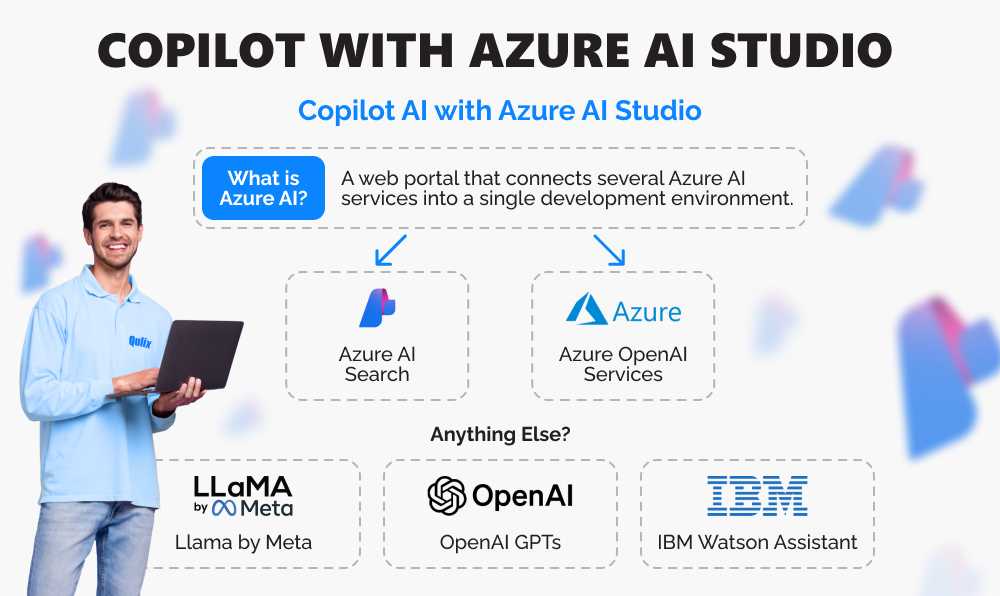
What Is Azure AI Studio?
Azure AI Studio is a comprehensive web portal that connects several Azure AI services into a single development environment, ensuring data integrity. Here’s what it offers:
A Quick Guide to Azure Services
Azure AI Search
Azure AI Search is an AI-based cloud service enhancing data search capabilities. It includes:
Azure OpenAI Service
Azure OpenAI Service provides access to OpenAI models through Microsoft Azure. It allows users to integrate advanced natural language processing and image generation models into their apps via Azure API.
The core technical aspects are:
That’s not All
If you’re not leaning towards Microsoft services, our team has a pack of other tools at our disposal to build your custom copilot. Here are some of the top alternatives:
In the Cockpit with Copilot
When you decide to incorporate AI into your team, whether through custom solutions or built-in options, a copilot can become your trusted sidekick. But remember, it isn't about granting you extraordinary knowledge or skills. It is about awakening your inner creativity and making work feel less like work. It is a partnership in which you soar, and your copilot steers.
If you feel that a custom copilot is what you need for your business to thrive, we’re here to help you launch it. Contact our AI support squad today for a free consultation.
Related articles
About the Author